
LockOut Equipment · 9 February 2024
Tagging Procedures for Equipment Lockouts

Ever found yourself in a bit of a pickle trying to navigate the web of rules that come with locking out equipment? Mate, join the club. It can feel like you’re stuck in one of those old bush mazes, but instead of hedges, it’s all these tagging procedures wrapping around ya.
Now listen up, ’cause we’ve got 10 ripper steps coming at you for nailing down a safe LOTO (Lockout/Tagout) process that’ll keep your workplace as safe as houses. Let’s crack on and sort out this tagging caper once and for all!
Key Takeaways
- Tagging is a critical communication tool in the LOTO process, providing essential information such as why equipment is out of use, who locked it out, and when it was done.
- Australian standards for LOTO must be followed to prevent accidents during maintenance by ensuring that all energy sources are properly isolated with clear lockout devices and tags.
- Proper training on LOTO procedures is vital to avoid common mistakes like failing to identify all energy sources or not locking and tagging out equipment correctly.
- Regular audits and inspections are necessary to ensure ongoing compliance with safety protocols within a comprehensive LOTO programme.
- It’s crucial to document all aspects of the lockout/tagout process for accountability and adherence to safety practices.

Understanding LOTO (Lockout Tagout) Systems
At the heart of workplace safety lies the Lockout Tagout (LOTO) system. This essential procedure involves isolating energy sources and using lock and tag devices to prevent accidental equipment operation.
Understanding LOTO is crucial for preventing workplace accidents and ensuring a safe work environment.
Definition and purpose
Lockout Tagout, or LOTO as we commonly call it, is a safety procedure we use to ensure that dangerous machines are properly shut off and can’t be started up again prior to the completion of maintenance or repair work.
It’s like putting a big ‘Do Not Use’ sign on the equipment. We put locks and tags directly on the energy isolation points – these could be switches, valves, or circuit breakers – so nobody can unintentionally re-energise the machine.
The purpose here is clear: preventing unexpected startups means we’re keeping everyone safe from potential harm.
Tags are our way of communicating crucial information about the lockout situation. They tell us what’s going on with the machine – why it’s out of commission, who tagged it out, and when they did it.
This isn’t just for show; these details are a critical part of maintaining workplace safety and ensuring that only authorised persons can remove locks and restore normal operations after maintenance is safely completed.
Having these procedures in place helps us prevent accidents and protects all of us working around this heavy machinery.
Australian standards for LOTO
Australian standards for LOTO provide critical guidelines to ensure the safety of personnel and equipment during maintenance or repair. These standards outline specific procedures for lockout/tagout, energy isolation, and verification processes to control hazardous energy effectively.
It is essential to adhere to these standards to prevent accidents and protect individuals working on machinery.
The Australian standard for LOTO mandates the use of lockout devices and tags that clearly communicate why the equipment has been isolated, when it was locked out, and who is responsible.
Adhering to these regulations helps in maintaining a safe work environment while performing service or maintenance tasks on machines. Proper implementation of these standards ensures compliance with industrial safety regulations and promotes workplace safety measures.
Importance of LOTO for safety
After understanding the Australian standards for LOTO, it’s crucial to recognise the importance of Lockout Tagout (LOTO) procedures for safety. These essential safety measures are vital in preventing accidents and protecting personnel when maintaining and repairing machinery.
By implementing LOTO standards, we ensure that hazardous energy is controlled during equipment maintenance or repair, safeguarding against accidental startup or release of dangerous energy.
Implementing proper lockout/tagout procedures can significantly reduce workplace hazards and prevent potential injuries. Tags play a critical role in providing important information regarding equipment isolation, thus serving as crucial warning signs against potentially hazardous conditions.
Steps for Effective LOTO Procedure
To ensure an effective LOTO procedure, it’s crucial to follow specific steps such as preparation, shutdown, isolation, lockout/tagout, stored energy check, isolation verification and re-energising equipment.
Each step plays a vital role in preventing accidents and ensuring the safety of everyone involved in the process.
Preparation
We begin the lockout/tagout (LOTO) process by preparing for equipment shutdown. This involves gathering detailed information about the machinery and identifying all energy sources to ensure a thorough isolation process.
We need to notify all affected personnel, allowing them enough time to prepare for the equipment shutdown, which is crucial in maintaining safety during service or maintenance works.
Understanding that proper preparation ensures a smooth and effective LOTO procedure, let’s delve into the next step of our LOTO outline – “Shutdown.”
Shutdown
After preparing for the equipment shutdown, the next crucial step in the lockout/tagout (LOTO) process is to ensure a complete and safe shutdown of the machinery or equipment. This involves notifying all affected personnel, shutting down the equipment according to standard operating procedures, and ensuring that all energy sources are turned off.
The shutdown phase should be meticulously conducted to prevent any accidental starts or releases of hazardous energy during maintenance or repair activities.
Once all affected personnel have been notified and informed about the upcoming machinery shutdown, it’s essential to execute a systematic process for turning off and isolating all energy sources connected to the equipment.
Isolation
Isolation is a critical step in the lockout/tagout (LOTO) process, ensuring that all energy sources are disconnected and the equipment is rendered safe for service or maintenance. It involves effectively shutting down the machinery and disconnecting it from all sources of hazardous energy to prevent accidental startups.
Proper isolation verification must be conducted after shutting down the equipment to ensure that no residual energy remains stored within the system. This step ensures that there are no unexpected releases of hazardous energy during servicing or repairs, safeguarding both personnel and property from potential harm.
Isolation procedures should always be carried out with meticulous attention to detail and adherence to safety protocols.
Lockout/Tagout
Tags are crucial in the lockout/tagout (LOTO) process, serving as a warning against potential hazardous conditions when equipment or machines are energised. They provide essential information about why the machine has been locked out, when the lock and tag were applied, and the responsible person’s name.
For effective LOTO procedures, it is important to use standard labels or tags that clearly explain the reason for isolation and identify who is accountable.
During machinery maintenance or repair, tagging becomes an integral part of hazard prevention methods. The Danger tag indicates that equipment isolation is in place and that the plant or machinery must not be operated.
Stored energy check
Before working on the equipment, make sure to conduct a stored energy check to eliminate any potential hazards. This involves identifying and dissipating all forms of stored energy in the machinery, such as electrical, mechanical, hydraulic, or pneumatic energy.
Once the stored energy is safely dissipated or isolated, proceed with locking and tagging out the equipment to prevent accidental startup or release of hazardous energy.
After conducting the stored energy check and ensuring that all forms of potentially hazardous energy have been controlled, it is crucial to apply effective lockout/tagout measures using appropriate locks and tags.
Isolation verification
After completing the stored energy check, it is crucial to proceed with isolation verification to ensure all energy sources are effectively isolated. This involves physically checking and confirming that all power sources and other forms of hazardous energy have been detached or rendered inoperative before commencing any maintenance work.
Verification often includes visual inspection and utilising testing equipment to confirm that the equipment is indeed in a zero-energy state.
During isolation verification, it’s essential to examine each part of the machinery individually and cross-check against safety protocols. Once verified, tagging the equipment becomes necessary by attaching a standard label or tag that indicates why the machine has been locked out along with information about when the lockout/tag was applied and who is responsible for it.
Re-energising equipment
After isolation and maintenance work are completed, the equipment can be re-energised. Before restoring normal operations, it is crucial to remove all lockout/tagout devices and ensure that all personnel are clear of the area.
Additionally, a thorough inspection should be conducted to verify that the equipment is safe for operation as per safety LOTO removal procedures.
Once the necessary checks have been completed and it’s confirmed that everything is safe, re-energising machinery and equipment should only be carried out by trained and authorised personnel with proper documentation in place.
It’s essential to follow standard operating procedures for safely restarting machinery to ensure a smooth transition from shutdown to regular operations without compromising safety measures.
Common Mistakes to Avoid in LOTO
Failing to provide proper training and not identifying all energy sources are common mistakes to avoid in LOTO. Proper tagging and lockout procedures are necessary to ensure safety during equipment maintenance and repairs.
Lack of training
Failing to provide proper LOTO training can lead to serious safety risks. Without adequate training, personnel may not understand the importance of lockout/tagout procedures or how to execute them correctly.
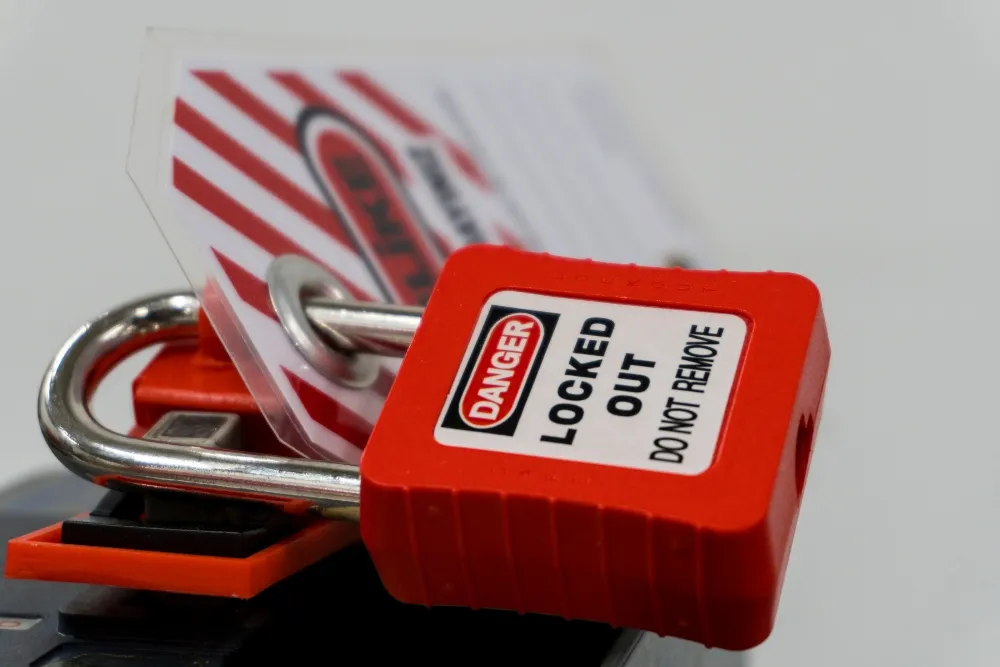
This could result in equipment being incorrectly locked and tagged, leaving it vulnerable to accidental start-up or release of hazardous energy. Inadequate training also increases the likelihood of employees mishandling equipment during maintenance or repair, potentially endangering themselves and others.
Without sufficient training on LOTO procedures, workers might fail to identify all energy sources that need to be locked out and tagged during maintenance activities. When employees are not trained properly, there is a higher risk of overlooking potential hazards and compromising the effectiveness of the lockout/tagout process.
Not identifying all energy sources
Failing to identify all energy sources can lead to serious safety risks. It’s crucial to thoroughly survey and document every potential energy source, from electrical and mechanical systems to hydraulic and pneumatic equipment, before initiating the lockout/tagout procedure.
A comprehensive list helps ensure that no hazardous energy is overlooked during the isolation process, ultimately safeguarding against unexpected re-energisation that could endanger personnel performing maintenance or service tasks.
Furthermore, understanding and recognising all energy sources allows for a more effective lockout/tagout procedure. This attention to detail minimises the risk of accidents due to residual or stored energy being inadvertently released during machinery maintenance or repair activities.
Failure to properly tag and lockout
Failure to properly tag and lock out equipment can lead to serious safety hazards. Tags play a crucial role in providing essential information about why the equipment is locked out, when it was locked, and who is accountable for it.
Without proper tagging, operators may not be aware of the potential danger or reason for isolation, posing a risk of accidental startup or release of hazardous energy.
Likewise, failure to effectively lock out energy sources can result in unexpected activation of machinery during maintenance or repair. This oversight could endanger personnel and compromise equipment integrity.
How to Establish a Comprehensive LOTO Programme
Establishing a comprehensive LOTO programme involves clearly defining and communicating the LOTO policy, creating a system for submitting LOTO reports, performing frequent LOTO audits, and enforcing documentation.
It also ensures that employees are properly trained in LOTO procedures and using LOTO software for safety compliance.
Clearly defining and communicating LOTO policy
Defining and communicating a Lockout/Tagout (LOTO) policy is critical for ensuring the safety of everyone involved in equipment maintenance. We must clearly outline the LOTO procedures, including steps for preparation, isolation, lockout/tagout, stored energy checks, and re-energising equipment to ensure that everyone understands their role in maintaining a safe working environment.
Additionally, we need to communicate this policy effectively so that all personnel are aware of the importance of LOTO procedures and adhere to them at all times.
Establishing a comprehensive LOTO programme includes creating a system for submitting reports on LOTO activities and conducting frequent audits to ensure compliance with safety protocols.
Creating a system for submitting LOTO reports
To maintain a comprehensive LOTO programme, it is crucial to establish a system for submitting LOTO reports. This involves creating a streamlined process for individuals to document and communicate lockout/tagout activities effectively.
By implementing an organised reporting system, home and office owners can ensure that all LOTO procedures are properly documented, tracked, and reviewed as part of their overall safety management approach.
Additionally, it promotes transparency and accountability within the organisation by providing a clear record of equipment isolation and tagout procedures.
Implementing a structured reporting system ensures that all lockout/tagout activities are captured accurately and facilitates easy access to historical data when needed. Furthermore, it enables stakeholders to identify trends or areas needing improvement in LOTO compliance through regular review sessions.
Performing frequent LOTO audits
Performing frequent LOTO audits is crucial to maintaining a safe working environment. Regular inspections help identify any potential issues or gaps in the lockout/tagout procedures, ensuring that equipment is properly isolated and secured.
By conducting these audits, we can ensure compliance with safety protocols and prevent accidents related to hazardous energy release.
Regular LOTO audits also provide an opportunity to reinforce proper lockout/tagout practices among employees. It allows us to assess the effectiveness of our LOTO programme, make necessary adjustments, and address any training needs.
Enforcing documentation
After performing frequent LOTO audits, we ensure that documentation is enforced for proper accountability and safety. The lockout/tagout register should be maintained with accurate details of each instance of equipment isolation.
Compliance with the lock and tag system requires thorough record-keeping, including the reasons for isolation, the application time of the lock and tag, as well as the responsible person’s details.
This information must be easily accessible to all personnel involved in maintenance or repair activities.

Inspection and Training for LOTO Compliance
Performing regular LOTO inspections and creating a detailed checklist is essential for ensuring equipment safety. Providing proper training for LOTO procedures and utilising LOTO software can also help in maintaining compliance with safety protocols.
Performing LOTO inspections
Performing LOTO inspections is crucial for ensuring equipment safety and compliance. Here are the steps to conduct effective LOTO inspections:
- Schedule regular LOTO inspections to assess the condition of lockout/tagout devices and ensure they are properly applied.
- Use a comprehensive LOTO inspection checklist to review each step of the lockout/tagout procedure, including preparation, isolation, and tagout.
- Conduct visual checks to verify that all energy sources are identified, isolated, and tagged according to safety protocols.
- Inspect all lockout devices to ensure they are in good working condition and securely fastened to the equipment.
- Review documentation related to previous LOTO procedures and verify that all necessary records are maintained for compliance purposes.
Creating a LOTO inspection checklist
Creating a LOTO inspection checklist is crucial for ensuring the safety and compliance of equipment lockout procedures. To establish an effective inspection checklist, consider the following key points:
- Identify all energy sources
- Verify isolation points
- Check lockout/tagout devices
- Review tagout information
- Assess documentation
- Confirm employee training
- Audit compliance with standards
- Conduct mock inspections
Providing proper training for LOTO procedures
After creating a comprehensive LOTO inspection checklist, it is essential to provide proper training for LOTO procedures. This involves educating personnel on the importance of lockout/tagout systems and their role in preventing accidents and protecting equipment.
Training should cover identifying energy sources, applying locks and tags, conducting isolation verification, and re-energising equipment safely.
Additionally, employees need to understand the significance of using standardised labels or tags when locking out machinery for maintenance or repair. Proper training ensures that everyone involved comprehensively follows LOTO standards to maintain safety during equipment shutdown processes and isolated de-energisation.
Using LOTO software for safety compliance
We use LOTO software to streamline safety compliance and ensure effective lockout/tagout procedures. This software helps us maintain detailed records of equipment isolation, employee training, and inspection reports.
By using LOTO software, we can easily generate lockout/tagout registers, conduct frequent audits, and enforce documentation for a comprehensive safety program.
LOTO software also allows us to create standardised checklists for equipment isolation verification and maintenance protocols. With this tool, we can efficiently track the status of out-of-service tags and manage the restoration steps when normal operations resume.
Tagout Innovation for Maximum Security in Your Space!
In conclusion, tagging procedures for equipment lockouts are crucial for ensuring the safety of personnel and preventing accidents. Clear communication and proper training are essential in establishing an effective LOTO program.
Regular inspections and audits help maintain compliance with safety protocols and prevent common mistakes. Implementing a comprehensive LOTO policy is key to protecting personnel during maintenance or repairs.
Maximise the effectiveness of your equipment lockout procedures with the Tagout System! Learn the art of precise tagging for foolproof equipment lockouts that enhance safety and compliance. Our comprehensive guide ensures your team understands the critical nuances of tagging procedures, preventing accidents and ensuring efficient workflow. Elevate your safety standards, reduce risks, and empower your teams with the precision of the Tagout System. Ready to tag your way to enhanced safety? Connect with us now and embark on a journey towards equipment lockout excellence!