LockOut Equipment · 2 February 2024
Innovative Technologies in Lockout Equipment
We all know the importance of keeping our homes secure, and how much of a hassle it can be when we’re locked out. We share your frustration; it’s a situation nobody wants to be in after a long day.
But fear not, because we’ve delved into the latest tech advancements in lockout gear and uncovered some gadgets that offer smart security at the touch of a button. We’ll walk you through these innovative solutions – they’re more user-friendly than you might imagine, mate! With these tools by your side, maintaining your family’s safety becomes less about stress and more about savvy.
Key Takeaways
- Smart devices and sensors are changing the game in lockout equipment, by sending real-time alerts if safety procedures aren’t followed properly. This helps homeowners dodge accidents caused by mistakes.
- New electronic lockout tagout systems and mobile apps are making old-school manual methods look like ancient history. They’re quicker, smarter, and keep a better eye on things to boot.
- RFID tech can track every step of locking out gear without missing a beat. It’s like having an extra set of eyes making sure everything’s safe before any work kicks off.
- Augmented reality isn’t just for games anymore – it gives folks a virtual peek into potential dangers around their electrical kit so they can steer clear of trouble.
- Looking ahead, these nifty tools promise to make sure that when it comes time to tinker with machinery or power sources at work, everyone stays as safe as houses.
The Importance of Lockout Tagout (LOTO) in Workplace Safety
Lockout Tagout, or LOTO, is a lifesaver in our workplaces. It’s all about keeping us safe by controlling dangerous energy sources during industrial maintenance and repairs. Electrical mishaps are no joke; they can cause severe injuries or even be fatal.
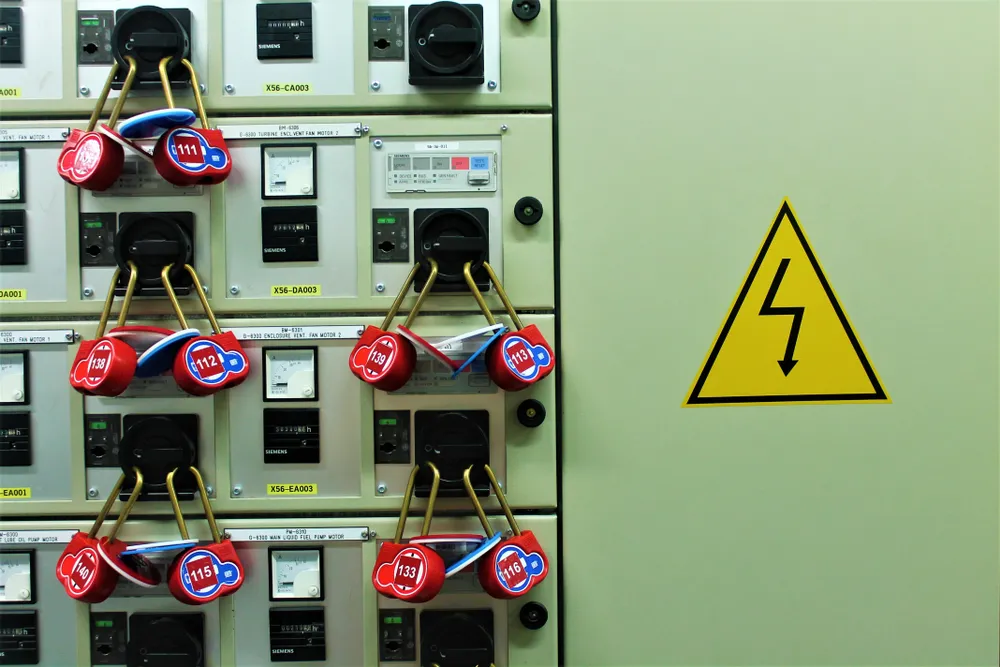
That’s why using lockout devices to isolate power is crucial, it prevents accidental equipment startups while work is being done.
Keeping things locked down means we’re not leaving safety to chance. With technology advancing, like smart devices and IoT integration into LOTO procedures, we’re seeing even better protection for everyone involved.
Sudbury’s new tech shows just how efficient power isolation can be, talk about innovation at its best! Moving on from these systems of safety, let’s delve into the traditional LOTO methods and discover what limitations they hold.
Traditional LOTO Procedures and Its Limitations
Traditional lockout tagout procedures often involve manual processes, which can be time-consuming and prone to human error. These limitations can pose significant risks to workplace safety and efficiency.
Manual processes
Traditional lockout tagout procedures often involve manual processes, which can be time-consuming and prone to human error. These manual steps may include physically placing locks on equipment, documenting isolation points, and conducting visual inspections to ensure proper isolation.
However, with emerging technologies in lockout equipment, such as electronic lockout tagout systems and mobile apps, these manual processes are being transformed into more efficient and reliable methods of equipment isolation.
As a result of these advancements in technology, the need for labour-intensive manual tasks is reduced while ensuring enhanced safety measures. The integration of digital solutions for lockout and tagout not only streamlines the process but also provides real-time information on equipment status.
This shift towards automation in lockout procedures represents a significant improvement over traditional manual processes.
Human error
Human error can lead to serious workplace accidents, but with the integration of advanced technologies in lockout equipment, the risk can be significantly reduced. Smart devices and sensors provide real-time information on equipment status, alerting users if proper procedures haven’t been followed.
This proactive approach helps prevent accidents caused by human oversight. Additionally, digitised systems make it easier for employees to adhere to safety protocols, enhancing overall workplace safety.
New advancements in lockout equipment technology allow for greater control over hazardous energy sources, minimising the potential for human error during maintenance and servicing tasks.
Time-consuming
Traditional lockout tagout (LOTO) procedures have been known to be time-consuming, often requiring manual processes that can slow down equipment maintenance and repair. This is a concern for homeowners looking to efficiently manage their electrical safety measures.
Fortunately, emerging technologies in LOTO are addressing this issue by streamlining the process and reducing the downtime associated with traditional methods. Smart devices and software solutions are enabling real-time information on equipment status, improving efficiency, and ultimately saving time for those responsible for maintaining safety equipment.
As standards evolve to embrace technology, it’s becoming clear that next-generation LOTO procedures will significantly reduce the time spent on isolation procedures while enhancing overall workplace safety.
Innovative Technologies in LOTO
We will explore electronic lockout tagout systems, mobile apps, RFID technology, and augmented reality as cutting-edge innovations in safety equipment. Dive deeper into these revolutionary technologies to discover how they are transforming lockout procedures in the workplace.
Electronic lockout tagout
Electronic lockout tagout systems are revolutionising safety procedures by providing real-time information on equipment status. These advanced technologies utilise smart devices and sensors to enhance electrical safety measures, reducing the risk of accidents and preventing downtime.
Integration with the Internet of Things (IoT) is making lockout/tagout procedures more efficient and connected, ensuring employee protection and equipment safeguarding. In Sudbury, Ontario, a new technology has been recognised for its ability to isolate power safely and effectively, showcasing how technological innovations are transforming lockout tagout processes.
Furthermore, mobile solutions and software are digitising lockout/tagout procedures in the era of the Industrial Internet of Things (IIoT), creating a more streamlined system for homeowners to manage equipment safety.
Mobile apps
Mobile apps are revolutionising lockout tagout procedures by providing convenient and accessible solutions for homeowners. These apps allow users to access and manage equipment lockout status at their fingertips, ensuring that hazardous energy sources are properly isolated before maintenance or repair work begins.
With the ability to receive real-time notifications and updates, homeowners can ensure the safety of themselves and their property, while complying with industry standards and regulations.
Furthermore, mobile apps streamline the documentation process, allowing for easier record-keeping and audit trails of lockout/tagout activities.
RFID technology
After exploring the potential of mobile apps in lockout equipment, let’s delve into the benefits of RFID technology. RFID, or radio-frequency identification, is a cutting-edge technology that uses electromagnetic fields to automatically identify and track tags attached to objects.
With this advanced system, homeowners can take advantage of real-time tracking and monitoring of their lockout/tagout procedures. By utilising RFID technology, it becomes possible to enhance safety measures by ensuring better visibility and control over equipment status.
RFID technology eliminates human error by providing accurate information on the status of locked-out equipment in real-time. This innovative approach offers an efficient way to prevent hazards and improve workplace safety for homeowners relying on modern advancements in lockout tagout equipment.
Augmented reality
Beyond the integration of RFID technology, augmented reality is another cutting-edge innovation in lockout equipment. With augmented reality, homeowners can overlay digital information onto the real world for a comprehensive view of equipment status and potential hazards.
This technology provides users with visual cues and real-time data, enhancing their ability to identify and isolate potential risks effectively.
Augmented reality in lockout equipment brings a new dimension to safety procedures by providing immersive visualisation of machine operations and potential dangers. By incorporating this next-generation technology into lockout processes, homeowners can benefit from improved accuracy and efficiency when identifying and controlling hazards associated with electrical equipment.
Case Studies
Explore real-life incidents and industry success stories that highlight the impact of innovative technologies in lockout equipment on workplace safety. Learn from these practical examples to understand how these advancements are changing the game for hazard prevention in industrial settings.
Real-life incidents
In Sudbury, Ontario, a new lockout technology was recognised for its ability to safely and efficiently isolate power. This innovation significantly reduced the risk of accidents and improved workplace safety by providing real-time information on equipment status.
Smart devices and sensors are being used to enhance electrical safety and lockout/tagout procedures, making them more reliable and efficient.
Another real-life incident involves the use of mobile solutions and software to upgrade lockout/tagout procedures into digitised systems in the IIoT era. This advancement is changing the way safety procedures are conducted in industrial settings, ensuring that employees are protected from potential hazards while optimising operational efficiency.
Industry success stories
Revolutionary technologies in lockout equipment have already made a significant impact on workplace safety. For instance, a technology developed in Sudbury, Ontario is recognised for its ability to isolate power safely and efficiently.
This cutting-edge system has been instrumental in preventing accidents and ensuring the safety of employees and equipment. In addition to this, mobile solutions and software are digitising lockout/tagout procedures, ensuring real-time information on equipment status while reducing the risk of downtime and accidents.
Furthermore, emerging technologies are enhancing lockout/tagout processes by making them safer and more reliable through wireless and digitised systems. These success stories demonstrate how state-of-the-art innovations are transforming workplace safety measures into efficient and effective ones.
Advantages and Concerns with Revolutionised LOTO Procedures
Revolutionised LOTO procedures bring enhanced safety measures and improved efficiency to industrial settings. However, potential concerns about the reliance on technology and the need for proper training should not be overlooked.
Enhanced safety
Emerging technologies in lockout equipment have revolutionised safety measures, providing real-time information on equipment status and significantly reducing the risk of accidents.
Smart devices and sensors, along with IoT technology, play a crucial role in improving electrical safety and lockout/tagout procedures. These modern advancements ensure that employees are protected from potential hazards while also eliminating downtime and enhancing overall workplace safety.
Additionally, digitised systems utilising wireless technology make lockout/tagout procedures more efficient and effective, contributing to a safer environment for both workers and equipment.
The evolution of lockout tagout processes is driven by state-of-the-art technologies that offer enhanced protection for industrial settings. With these cutting-edge innovations in safety equipment, there is an increased focus on leveraging technology to improve safety protocols.
Potential concerns
We have some legitimate concerns about the adoption of innovative lockout equipment technologies. The integration of advanced technology into safety procedures raises the issue of potential cybersecurity vulnerabilities and system failures, which could compromise equipment safety and employee well-being.
It is essential to address these concerns by ensuring robust cybersecurity measures are in place and that systems undergo thorough testing to minimise any risk of failure.
The introduction of new technologies also necessitates adequate training for employees to ensure they can effectively and safely operate the advanced lockout equipment. Inadequate training may lead to misuse or improper implementation, undermining the intended safety benefits.
Future Implications and Benefits for Workplace Safety
The future of lockout equipment is promising, with innovative technologies leading to improved efficiency, reduced human error, and increased visibility and control in workplace safety.
These advancements are set to revolutionise the way we approach isolation procedures and enhance safety measures in industrial settings.
Improved efficiency
Revolutionary technologies in lockout equipment, such as electronic lockout tagout and mobile apps, have significantly improved efficiency by streamlining the isolation procedures.
Real-time information on equipment status provides enhanced safety measures, reducing the risk of accidents and downtime. Additionally, integrating IoT technology with lockout/tagout procedures ensures seamless protection for both employees and equipment, ultimately improving workplace safety standards.
The utilisation of next-generation lockout and tagout systems has transformed traditional manual processes into digitised and connected systems. This upgrade not only reduces human error but also offers increased visibility and control over safety procedures in industrial settings.
Reduced human error
Innovative technologies in lockout equipment have significantly reduced human error, enhancing safety and minimising the risk of workplace accidents. Smart devices, sensors, and digitised systems provide real-time information on equipment status, ensuring that lockout/tagout procedures are conducted with precision and accuracy.
With the integration of IoT technology and mobile solutions, potential concerns related to human error are addressed effectively. These advancements not only streamline the process but also empower homeowners with state-of-the-art technologies for lockout equipment, ultimately contributing to a safer working environment.
The use of wireless and digitised systems has revolutionised how lockout/tagout procedures are conducted, making them more efficient and reliable than ever before. As standards continue to evolve, embracing these cutting-edge innovations in safety equipment is crucial for enhancing workplace safety while reducing human errors associated with traditional LOTO procedures.
Increased visibility and control
Lockout/tagout procedures have been revolutionised with innovative technologies, providing increased visibility and control over equipment safety. Utilising state-of-the-art advancements in lockout technology such as electronic systems and RFID technology enables real-time monitoring of equipment status, ensuring enhanced safety measures in industrial settings.
With the integration of IoT technology, lockout/tagout procedures can now protect both employees and equipment while minimising downtime through efficient isolation of power.
Moreover, the use of wireless and digitised systems brings an extra layer of control to lockout/tagout procedures, making them more efficient and reliable. As a result, homeowners can rest assured that these cutting-edge innovations provide a higher degree of security for their electrical equipment.
Upgrade with Innovative Technologies
In summary, innovative technologies are revolutionising lockout equipment, enhancing workplace safety by providing real-time information and improving efficiency. These cutting-edge advancements are reducing the risk of accidents and human error, ultimately making lockout procedures safer and more reliable.
With the integration of smart devices, sensors, and IoT technology, the future implications for workplace safety look promising with increased visibility and control over equipment isolation procedures.
As technology continues to evolve, it is evident that modernising lockout equipment will continue to play a crucial role in maintaining a safe work environment.