LockOut Equipment · 3 March 2024
Colour Coding in Tag Out Systems for Enhanced Safety
Ever found yourself in a bit of a sticky situation, hesitating before you switch on a piece of equipment, wondering if it’s really safe to use? You’re definitely in good company – it happens to the best of us.
That niggling concern for safety is exactly what drives the importance of systems like Lockout Tagout (LOTO). Dive into our blog as we unpack how something as straightforward as colour coding can be your trusty mate in keeping workplace hazards at arm’s length.
Key Takeaways
- Colour coding in lockout tagout systems uses bright colours to quickly show the level of hazard and who’s working on the machinery. Red means “DANGER”, yellow is for “CAUTION”, and orange signifies “WARNING”.
- Keying systems add safety by making sure only those with the right keys can unlock equipment, preventing accidents from unexpected startups.
- Regular training sessions help everyone understand what each colour means, and audits check if everyone’s following the rules properly.
- Some workplaces might use different colours like purple or teal for specific needs, but it’s all about keeping people aware of dangers around them.
- Mixing colour codes into other safety plans helps make sure that every part of a workplace is taken care of when using or fixing machines.
Understanding Lockout Tagout Systems
Lockout Tagout (LOTO) is a safety procedure used to ensure that dangerous machines are properly shut off and not restarted during maintenance or service work. It involves putting locks on energy isolation devices and tagging them with information about the worker performing the service.
This is crucial for workplace safety as it helps prevent accidents caused by the unexpected startup of machinery or equipment.

What is Lockout Tagout?
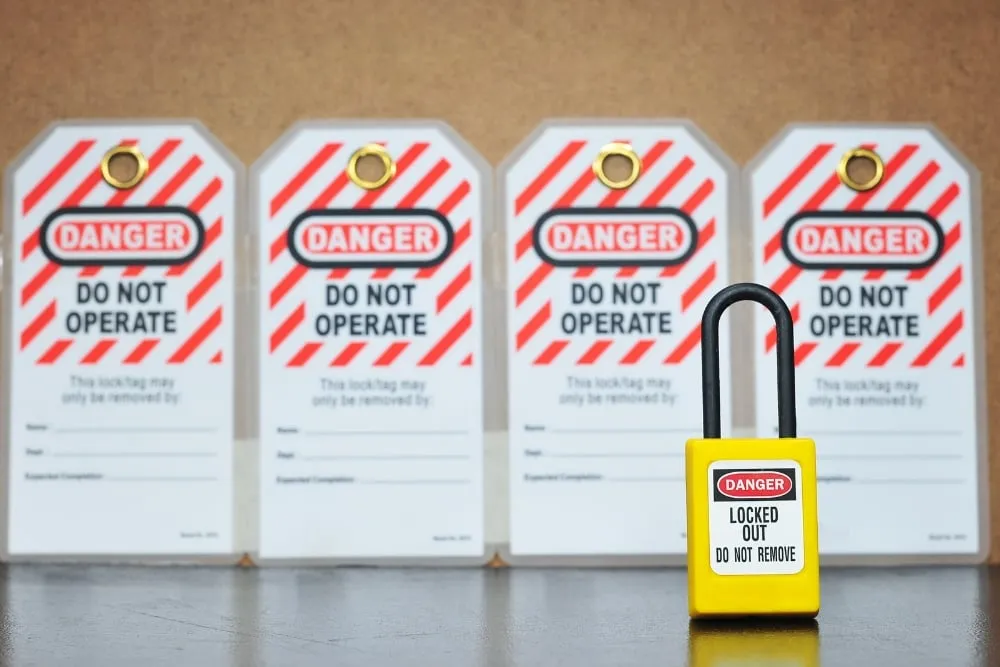
We use lockout tagout to protect ourselves and our team when repairing or maintaining machinery and equipment. This safety procedure involves placing a lock and a highly visible tag on the energy isolation point of the equipment.
It’s like putting a big ‘Do Not Disturb’ sign that warns others not to switch the machine back on while we’re working on it.
This method is all about control – controlling hazardous energies to prevent accidental start-ups. By locking down machines with these special locks and tags, we make sure everyone around knows that this piece of equipment is off-limits until maintenance is complete and the individual responsible gives the all-clear.
Safety comes first, whether we’re dealing with electrical circuits, gas lines, or mechanical parts.
Importance of Lockout Tagout for Workplace Safety
Lockout tagout is crucial for workplace safety, safeguarding workers and employees from potential hazards associated with machinery. The brightly coloured padlocks and tags, such as red, yellow, or orange hues are an immediate visual indicator of the status of a machine.
Colour-coding in lockout tagout systems enhances safety by providing clear visual signals for different types of hazards, ensuring that personnel can easily identify danger levels based on the assigned colours.
Additionally, specific colour schemes for lockout tagout locks allow easy identification of the type of lock being used on equipment.
Colour Coding in Lockout Tagout
Colour coding plays a vital role in lockout tagout systems, helping to quickly identify the nature of the hazard and the type of energy being controlled. Understanding the standard colour scheme and implementing it effectively is key to enhancing workplace safety.
The Standard Colour Scheme for Lockout Tagout
The standard colour scheme for lockout tagout (LOTO) includes colours like red, yellow, and orange. Red padlocks are often used to indicate “DANGER,” while yellow is used for “CAUTION” and orange for “WARNING”.
Additionally, specific colours such as black, blue, green, purple, teal, and white may also be included in the standard colour scheme for LOTO devices. This system of using different coloured locks and tags helps quickly identify the type of hazard or level of caution associated with specific machinery or equipment maintenance procedures.
To enhance safety in workplaces and facilities where machinery safety is crucial, many organisations adopt these specific colour schemes to easily identify the type of lock being used.
Alternatives to the Standard Colour Scheme
When considering alternatives to the standard colour scheme for lockout tagout, it’s important to evaluate specific needs and potential benefits. Some organisations opt to allocate unique colours for different departments or machinery categories, allowing for a more tailored approach that aligns with their operational requirements.
Additionally, incorporating additional colours such as purple or teal can help in further categorising specific types of hazards or maintenance tasks, providing clearer visual cues for employees.
By customising the colour-coding system to fit individual workplace demands, businesses can enhance safety protocols and streamline maintenance procedures more effectively.

Keying Systems for Enhanced Safety
Keying systems in lockout tagout add an extra layer of safety by ensuring that only authorised personnel can remove the lock and re-energise the equipment. This helps prevent accidental de-energisation or start-up, enhancing overall workplace safety.
How Keying Systems Work in Lockout Tagout
Keying systems are a fundamental part of lockout tagout procedures. Each employee or team uses unique keys that correspond to their assigned locks and tags, ensuring that only authorised personnel can access the locked-out machinery.
This prevents accidental removal of lockout devices and allows for individual accountability in the maintenance process, promoting a safer work environment.
Through keying systems, home and office owners can maintain strict control over who has access to equipment during servicing or repairs. By assigning specific keys to designated employees or teams, it becomes easier to track and manage maintenance activities while reducing the risk of potential accidents.
Benefits of Keying Systems for Lockout Tagout
- Allowing only authorised personnel with the corresponding key to release locked-out equipment, preventing unauthorised access and potential accidents.
- Facilitating a clear visual identification of who is currently in charge of a particular locked-out system, improving coordination and communication among maintenance personnel.
- Enhancing efficiency by ensuring that the right person has the necessary access at the appropriate time, optimising maintenance workflow.
- Minimising the risk of human error by eliminating confusion and ensuring that only qualified individuals can perform lockout or tagout procedures.
- Enabling easy integration with existing management systems, such as inventory tracking, to effectively monitor and control access to lockout devices.
- Providing a customisable solution to fit the specific needs and requirements of different industries or workplaces, enhancing overall safety measures.
Commonly Used Colours and their Meanings in Lockout Tagout
Red signifies “DANGER,” indicating that there is a high risk of serious injury or death if the equipment is not properly locked out. Yellow communicates “CAUTION,” warning of potential hazards that may cause minor injuries.
Orange is used for “WARNING,” alerting workers to be cautious and take necessary safety measures before proceeding with maintenance work. Other possible colour codes can also be implemented based on specific industry requirements and standards.
Red: “DANGER”
Red, the colour of danger in lockout tagout systems, serves as a clear warning sign in workplaces and commercial settings. This vibrant hue is commonly used for padlocks and tags to signal potential hazards associated with locked-out equipment or machinery.
The use of red in the lockout tagout process helps indicate to all personnel that a specific piece of equipment is out of order or undergoing maintenance work. By highlighting potential dangers with this striking colour, workers are alerted to take necessary precautions before attempting any operations on the secured machinery.
Incorporating red into your lockout tagout system not only complies with safety standards but also enhances workplace safety by effectively communicating hazardous situations. It aids in preventing accidental re-energization of equipment under maintenance, thereby reducing the risk of workplace accidents and ensuring the well-being of employees and individuals within the vicinity.
Yellow: “CAUTION”
Yellow is used as a cautionary colour in lockout tagout systems, indicating potentially hazardous situations that may arise during machine maintenance or repair. It’s important for home and office owners to recognise the significance of this colour within their facilities.
The yellow padlocks serve as a visual warning to stay alert and proceed with care when encountering machinery or equipment that has been isolated for maintenance or safety procedures.
Understanding the meaning behind these colour codes is crucial for maintaining safety protocols within your premises.
Orange: “WARNING”
Orange is a significant colour in lockout tagout systems, signalling a “WARNING” of potential hazards. This vibrant hue alerts personnel to exercise caution due to the presence of a specific danger or risk associated with the equipment or machinery being serviced.
Using orange for lockout devices and tags effectively communicates potential dangers, prompting individuals working on machines to adhere strictly to safety protocols and procedures.
Incorporating this bright shade in your lockout tagout system will help reinforce awareness of potential risks and ensure that necessary precautions are taken when handling hazardous equipment.
Other Possible Colour Codes
When considering other possible colour codes for lockout tagout systems, it’s important to assess the specific hazards and risks in your workplace. For example, fluorescent orange can be used to indicate “BIOLOGICAL HAZARD”, providing a clear visual warning for potential biological risks.
Another consideration is the SAA Industrial Safety Colour Code, which uses green and white to signify the location of safety and first aid equipment. These alternative colour codes can enhance safety by offering additional visual cues for different types of hazards or emergency equipment.
Understanding these alternative options allows for greater flexibility in tailoring your lockout tagout system to the unique needs of your workplace environment.
Implementing Colour Coding in Your Lockout Tagout System
When implementing colour coding in your lockout tagout system, it’s important to carefully select and standardise the colours for different types of equipment and hazards, regularly train employees on the meanings of each colour, and conduct regular audits to ensure compliance with the system.
To learn more about how colour coding enhances safety in tag-out systems, read our full blog post!

Tips for Successful Implementation
To successfully implement colour coding in tag-out systems, it’s important to:
- Train all personnel on the specific colour codes and their meanings for clear understanding.
- Regularly audit the system to ensure compliance and identify any issues promptly.
- Integrate the colour coding system with other safety management systems for comprehensive coverage.
- Communicate the importance of following the colour coding system through signage and training programs.
- Use standard colours for safety padlocks and key tags, such as red for “DANGER”, yellow for “CAUTION”, and orange for “WARNING”.
- Ensure that there is a clear procedure in place for obtaining and using the specific coloured locks and tags.
- Monitor the usage of specific colours to ensure consistency and avoid confusion among personnel.
- Review and update the colour coding system as needed based on feedback from employees or changes in regulations or industry standards.
Importance of Regular Training and Audits
To ensure the effectiveness of our lockout tagout system, regular training and audits play a crucial role. By providing ongoing training sessions for employees, we can reinforce the importance of adhering to safety protocols and using colour-coded locks effectively.
This ensures that everyone is well-informed about the significance of different colours used in lockout tagout systems, thus minimising the risk of mishaps due to misinterpretation or lack of knowledge.
Regular audits further solidify our commitment to safety by allowing us to assess whether the colour coding system is being consistently followed and understood across all areas within our facility.
Through continuous monitoring and evaluation, we can identify any deviations from established procedures and address them promptly. Additionally, audits offer an opportunity to gather feedback from employees on the practicality and effectiveness of the current colour-coding scheme, enabling us to make necessary adjustments for enhanced safety measures.
Integration with Other Management Systems
Integrating colour coding in lockout tagout systems with other management systems is crucial for maintaining a safe work environment. By aligning lockout tagout procedures with other safety protocols, such as risk management and occupational health and safety regulations, the overall safety culture within the workplace can be significantly enhanced.
For instance, incorporating the use of standardised colours for different types of hazards into equipment maintenance schedules or operational procedures can streamline communication and ensure consistent adherence to safety protocols across various departments.
Additionally, integrating lockout tagout colour coding with other management systems helps reinforce comprehensive safety measures for electrical equipment, machinery, and maintenance procedures.
It also assists in clearly outlining isolation methods that must be followed during servicing or repairs at industrial facilities or office spaces. This integration promotes a proactive approach to safety by providing visual cues that enhance awareness among personnel while carrying out maintenance tasks or dealing with potential risks associated with machinery.
Elevate Safety Standards with Our Tagout Solution!
In conclusion, colour coding in tag-out systems provides clear visual indicators for different hazards and personnel involvement in machinery maintenance and isolation. This system enhances safety by using bright colours like red, yellow, and orange to signify danger, caution, and warnings.
Implementing this colour scheme assists in quickly identifying who is working on a system or the type of hazard present. Regular training and audits are crucial for the successful implementation of colour coding in lockout tagout systems.
Integrating this approach with other management systems further enhances workplace safety.
Boost safety with color-coded Tag Out systems. Contact us today for expert guidance!