Tag Out System · 17 February 2024
Case Studies Highlighting Successful Tag Out Implementation
Running your own business means taking on a fair dinkum responsibility for the safety of everyone who steps foot in your workplace. We understand that nobody wants to be left saying “she’ll be right” when it comes to safety protocols.
It’s clear as day that top-notch lockout/tagout practices are essential, and we’re not just spinning you a yarn, the research backs it up! By delving into case studies, our article will shed light on how robust tag-out systems have been true blue game changers, ramping up not only the safety but also ensuring everyone’s playing by the rules and working like a well-oiled machine.
Key Takeaways
- Businesses can ramp up safety and compliance by implementing advanced lockout/tagout procedures, as shown through real-world case studies.
- Switching from traditional padlocks to high-tech lockout systems with features like wireless monitoring helps prevent accidents and unauthorised equipment use.
- Regular training and updated education programmes are essential for workers to handle new lockout tech effectively, ensuring everyone’s well-being on the job site.
- Locks that vary – keyed differently or keyed alike – each have their perks, but it’s important to pick what works best for your team’s needs.
- Future trends in lockout tech are leaning towards smart devices and the Internet of Things (IoT), which promise even better control over workplace hazards.
Understanding LOTOTO Safety
LOTOTO safety is essential in industrial settings to prevent workplace accidents and ensure equipment shutdown. It involves legal requirements, the LOTOTO process, and its importance in hazard prevention.
Legal Requirements and Standards
In our workplaces, we must follow strict legal requirements and standards to ensure everyone’s safety. These laws demand that we set up a lockout or tagout programme for safely taking equipment offline and securing it.

This isn’t just good practice; it’s vital for meeting the rules that keep us all safe from harm. Implementing these standards means using locks to make sure machines are completely shut down and can’t be turned on by accident.
We’re talking mandatory compliance here, no shortcuts allowed. Abiding by these protocols significantly reduces industrial accidents, making our work environments safer for everyone involved.
It’s about more than just following the law, it helps prevent injuries and can even save lives on the job. So, we take this seriously by applying best practices in hazard control and risk management as part of our daily routine.
The LOTOTO Process
- Implementing an effective lockout or tagout programme, ensuring equipment is taken offline, locked into an “off” position, and properly labelled for added safety.
- Focusing on electrical single line at lockout/tagout procedures to emphasise the importance of training and awareness programmes for workers.
- Complying with standards by taking critical steps to prevent workplace hazards through the effective implementation of lockout/tagout procedures.
- Highlighting the importance of lockout/tagout programmes and the consequences of not implementing them through case studies and research findings.
- Incorporating advanced lockout padlocks as a powerful tool in improving workplace safety and implementing successful tag-out procedures.
Importance of LOTOTO in Industrial Settings
Implementing effective lockout/tagout (LOTOTO) procedures in industrial settings is crucial for ensuring the safety of employees and compliance with regulations. By following strict LOTOTO processes, such as properly isolating equipment, locking it in the “off” position, and clearly labelling it, workplace accidents can be significantly reduced.
Furthermore, implementing a comprehensive LOTOTO programme not only improves operational safety but also enhances overall compliance standards within industrial facilities. Case studies have demonstrated that organisations that prioritise LOTOTO experience fewer workplace accidents and improved employee safety.
LOTOTO plays a vital role in preventing workplace hazards and maintaining occupational health by effectively controlling energy sources and isolating equipment during maintenance procedures.

Traditional Lockout Padlocks and Limitations
Traditional lockout padlocks are commonly used in industrial settings for equipment isolation during maintenance or servicing. However, these padlocks have limitations such as the risk of key duplication, lost keys, and the need for multiple locks for group lockout situations.
Keyed Different and Keyed Alike Lockout Padlocks
Lockout padlocks are a vital part of keeping our workplaces safe, especially for us as homeowners and office owners. There are two main types to consider: keyed different and keyed alike padlocks.
| Keyed Different Padlocks | Keyed Alike Padlocks |
|---|---|
| Each padlock has a unique key, enhancing security as only the key holder can remove the lock. | All padlocks can be opened with the same key, simplifying management for teams using multiple locks. |
| Ideal for scenarios where individual accountability is critical. | Best for situations where multiple locks are in use, and speed of access is important. |
| Reduces the risk of unauthorised removal of a lock. | Allows a supervisor to carry just one key for all locks, streamlining the process. |
| Can be cumbersome in environments with many locks due to the large number of keys required. | Potential security risk if the master key is lost or stolen. |
We’ve seen the advantages and drawbacks of these traditional padlocks. However, with technological advancements in lockout padlocks, we’re moving towards more sophisticated systems that enhance safety and efficiency in our workplaces. These new technologies are changing the game, allowing us to monitor and control lockout tagout processes like never before. Let’s delve into how these advancements are making a difference.
Technological Advancements in Lockout Padlocks
We’ll explore the latest advancements in lockout padlocks, including advanced locking mechanisms and integrated safety features. Additionally, we’ll discuss electronic lockout tagout systems, wireless communication and monitoring, cloud-based data management, and mobile applications for LOTO.
Advanced Locking Mechanisms
Advanced locking mechanisms play a crucial role in enhancing workplace safety and implementing successful tag-out procedures. These mechanisms offer improved control measures and can effectively prevent equipment from being energised during maintenance or repair tasks.
Implementing advanced lockout padlocks ensures that only authorised personnel can access the locked-out equipment, reducing the risk of accidental startup and potential hazards. Furthermore, these innovative locking systems provide an additional layer of security, offering peace of mind for home and office owners when it comes to controlling energy sources and ensuring compliance with safety procedures.
Integrated Safety Features
Integrated safety features in modern lockout padlocks play a crucial role in enhancing workplace safety. These advanced mechanisms include built-in alarms, shackle guards, and durable materials to withstand harsh industrial environments.
Incorporating these features ensures added protection against unauthorised access and tampering while providing a clear visual indication of equipment status.
The implementation of integrated safety features goes beyond mere compliance with regulations; it demonstrates a commitment to safeguarding employees’ well-being and preventing workplace accidents.
Electronic Lockout Tagout Systems
We can leverage advanced technology to enhance our lockout tagout procedures, ensuring optimal safety measures in our workplaces. Electronic lockout tagout systems offer wireless communication and monitoring capabilities, enabling real-time tracking of equipment status and enhancing overall operational efficiency.
With cloud-based data management and mobile applications for LOTO, organisations can streamline their processes while maintaining stringent safety standards. These systems provide a robust solution for energy control and workplace procedures, offering a seamless integration of safety features to prevent workplace accidents.
Implementing electronic lockout tagout systems aligns with legal requirements and industry standards, reflecting our commitment to employee safety and compliance. By embracing these technological advancements in lockout padlocks, we equip ourselves with the tools necessary to reduce workplace hazards and ensure efficient equipment maintenance.
Wireless Communication and Monitoring
Lockout/tagout systems with wireless communication and monitoring capabilities offer real-time insights into equipment status, enhancing overall workplace safety. By implementing these advanced systems, home and office owners can remotely monitor lockout/tagout processes and receive instant alerts regarding any unauthorised access or procedural violations.
This proactive approach empowers them to take immediate corrective actions, preventing potential accidents and ensuring compliance with safety regulations.
Additionally, wireless communication enables seamless coordination among maintenance teams and supervisors, streamlining the lockout/tagout process for enhanced efficiency. With cloud-based data management and mobile applications for LOTO systems, home and office owners can access critical information from anywhere at any time.
Cloud-Based Data Management
Transitioning from wireless communication and monitoring, we understand the importance of cloud-based data management in modern lockout/tagout systems. Organisations can now securely store and access critical lockout/tagout information through cloud platforms.
This advancement allows for real-time updates and easy accessibility to authorised personnel, ensuring that safety procedures are always up-to-date and readily available.
Cloud-based data management also provides a centralised location for lockout/tagout documentation, including equipment maintenance logs, inspection records, and employee training certifications.
Mobile Applications for LOTO
Mobile applications for LOTO offer convenient solutions to manage lockout/tagout procedures and ensure workplace safety. These apps provide access to electronic lockout tagout systems, allowing users to initiate and monitor the status of lockout/tagout devices wirelessly.
With cloud-based data management, employees can view equipment status, receive real-time alerts, and access historical data through their smartphones or tablets. This technology enhances compliance with regulations by providing a streamlined approach to LOTO processes.
Implementing mobile applications for LOTO can revolutionise safety procedures in homes and offices. The convenience of wireless communication and monitoring through these apps simplifies the process of ensuring equipment is properly locked out, contributing to improved employee safety and reduced workplace accidents.
Training and Education for LOTOTO
Safety training and education are essential for employees to understand the importance of lockout tagout procedures and comply with safety regulations. Compliance tools, such as online training modules and certification programs, can help ensure that workers are well-equipped to implement LOTOTO processes effectively.
Compliance Tools
Implementing an effective lockout/tagout programme demands the utilisation of various compliance tools to ensure workplace safety and regulatory adherence. Here are some essential compliance tools for successful tag-out implementation:
- Lockout/Tagout Procedures Manual: A comprehensive manual outlining detailed procedures for isolating hazardous energy sources during maintenance or servicing tasks.
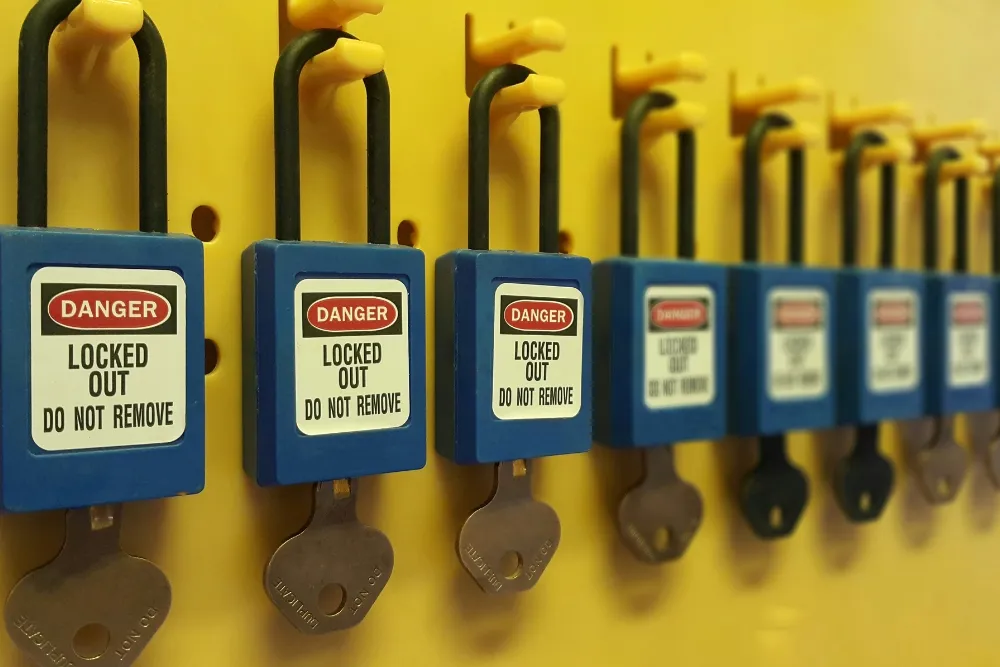
- Safety Locks and Tags: High-quality, durable locks and tags designed specifically for lockout/tagout procedures to prevent unauthorised equipment operation.
- Training Programmes: Detailed training sessions and educational materials to ensure that all employees understand the importance of lockout/tagout procedures and how to implement them correctly.
- Audit Checklists: Regular inspection checklists that provide a structured approach to evaluate the effectiveness of lockout/tagout procedures within the workplace.
- Documentation Software: Utilisation of digital platforms for recording, storing, and accessing lockout/tagout documentation, including equipment isolation logs, procedure records, and employee training records.
- Compliance Tracking Systems: Utilising software systems to monitor compliance with lockout/tagout regulations and track maintenance schedules for all safety equipment.
Case Studies: Successful Implementations
Numerous industries have successfully implemented advanced lockout tagout technologies, resulting in improved safety outcomes. Case studies based on descriptions of lockout/tagout inspections derived from compliance interpretations, court decisions, and Review Commission findings illustrate the importance of lockout/tagout programs and the consequences of not implementing them.
Implementing an effective lockout/tagout programme offers numerous benefits, including reduced workplace accidents, improved employee safety, and compliance with regulations. The article underscores the critical steps required to prevent workplace hazards through the effective implementation of lockout/tagout procedures.
Advanced lockout padlocks have been highlighted as a powerful tool in improving workplace safety and implementing successful tag-out procedures.
The importance of electrical single lines at lockout/tagout procedures is highlighted by research and case studies showing the need for training and awareness programmes for workers.
To comply with standards, organisations must implement a lockout or tag-out programme that ensures equipment is taken offline, locked into an “off” position, and properly labelled.
Few studies have examined lockout/tag-out effectiveness from a user perspective; however, this highlights the need for more research in this area. Lock-out/tag-out implementation can lead to a reduction in workplace accidents as well as improved employee safety – proving its significance across various industrial settings.
Future Trends in Lockout Tagout Technology
As we look to the future, it’s evident that lockout tagout technology will continue to advance, offering enhanced safety measures for homeowners and office owners. The integration of Internet of Things (IoT) capabilities into lockout tagout devices is expected to revolutionise the way equipment is isolated and tagged out.
This trend will allow for real-time monitoring and control of energy sources, enabling more efficient management of hazardous energy during maintenance or servicing activities.
Additionally, the development of smart wearable devices designed specifically to aid in lockout tagout procedures is on the horizon. These wearables will provide workers with personalised alerts and reminders regarding their specific lockout responsibilities, ensuring greater adherence to safety protocols.
Furthermore, advancements in augmented reality (AR) and virtual reality (VR) are anticipated to play a significant role in training programmes for lockout tagout procedures, offering immersive learning experiences that enhance worker understanding and retention of crucial safety practices.
These innovations represent just a glimpse into the exciting future of lockout tagout technology, promising even higher levels of workplace safety and risk prevention.
Your Secure Space Starts with Our Tagout System!
In conclusion, successful implementation of lockout/tagout procedures is critical for ensuring workplace safety. Case studies demonstrate the efficacy of advanced lockout padlocks and technological advancements in improving safety outcomes.
Organisations can benefit from reduced accidents and improved compliance by adopting effective tag-out strategies. It is imperative to prioritise employee training and awareness programmes to maintain a safe working environment.
Discover the power of successful tag-out implementation with Tag Out System’s insightful case studies. Gain valuable insights into real-world scenarios where our solutions have elevated safety standards and operational efficiency. Let our success stories guide you toward implementing effective tag-out practices in your facility. Contact us today to explore our case studies and embark on your journey to enhanced workplace safety.